Valencia Property Market 2026 — What Foreign Investors Need to Know
By Turia Property
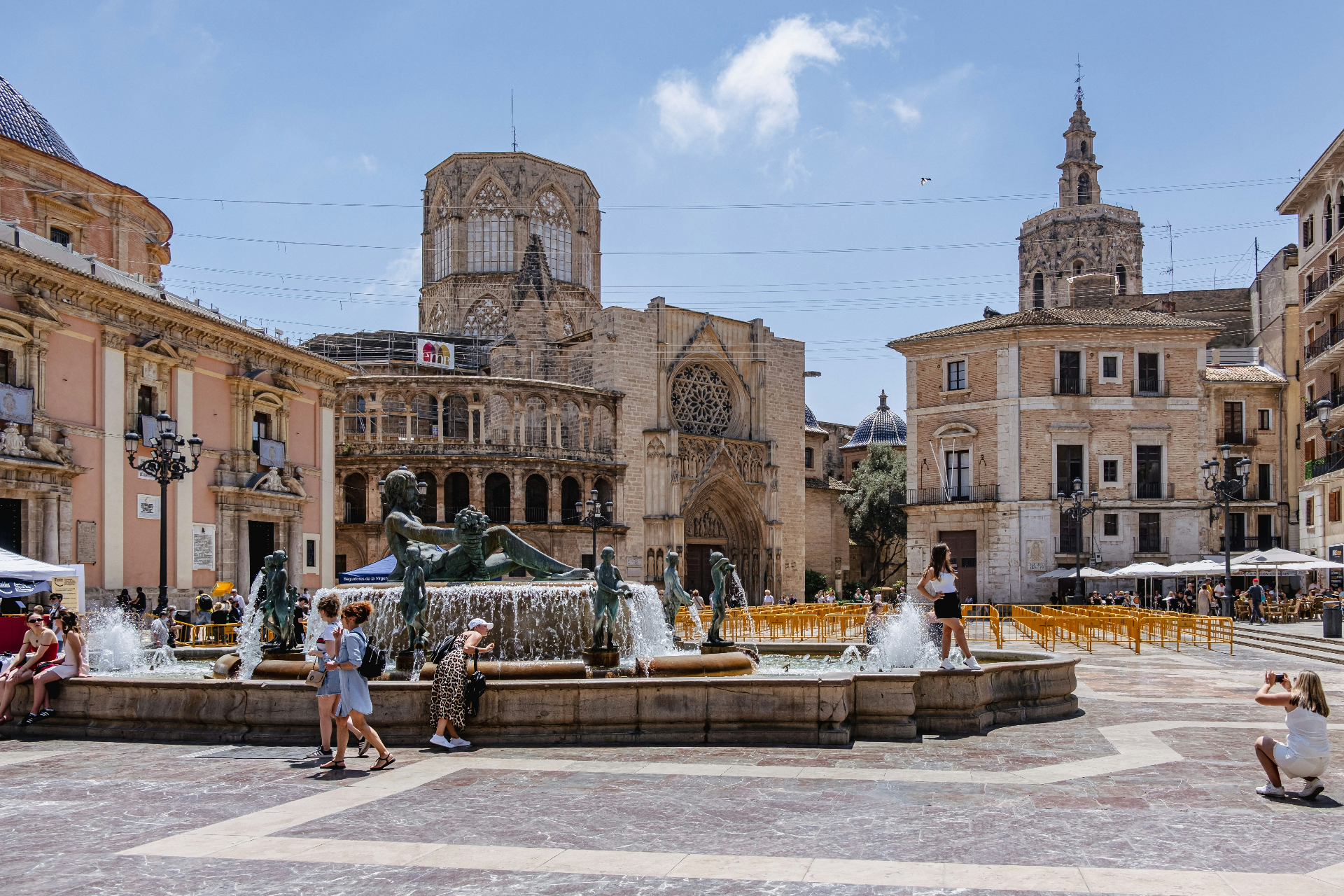
Valencia has spent the last few years quietly becoming one of Spain's most talked-about property markets — and 2026 has brought both continued growth and a significant tax change that foreign buyers should know about.
This post covers where the market stands right now, what's driving it, and a tax change that took effect just two weeks ago that could save buyers thousands of euros.
Note: This post is for general information only and does not constitute financial or investment advice. Property values and tax rules change — always verify current figures with a local lawyer or gestor before making purchase decisions.
The headline: prices are rising, and rising fast
Multiple sources confirm Valencia has been one of Spain's fastest-growing property markets over the past year, with year-on-year price growth in the region of 14–22% depending on the area, quarter, and measurement method — among the strongest growth rates in the country. The Comunitat Valenciana posted +15.9% year-on-year in Q4 2025 and +19.1% in Q1 2026, placing it just behind Madrid (+19.6%) among Spain's fastest-growing regions. Looking further back, Valencia property prices have risen an estimated 35–45% since 2019.
A word of caution on specific price-per-square-metre figures: you'll see very different numbers depending on the source — anywhere from around €1,650/m² to over €3,000/m². This isn't necessarily contradictory; it reflects different things being measured. City-wide averages (including outer districts) sit much lower than figures for central neighbourhoods like Ruzafa, Ciutat Vella, or El Eixample, where prices commonly range from €3,800–4,700/m². Listing prices (what sellers ask) also differ from transaction prices (what buyers actually pay).
The practical takeaway: for an 80m² apartment, expect anywhere from roughly €150,000 in more peripheral or developing districts to €300,000–400,000+ in sought-after central neighbourhoods. Location within Valencia matters enormously — far more than the city-wide average suggests.
What's driving the growth?
Three factors are consistently cited across market analyses:
Population growth. Valencia's population grew by nearly 20,000 people in 2025 alone, pushing the city past 840,000 residents. Housing supply hasn't kept pace, creating sustained structural demand.
Foreign buyer demand. Foreign buyers accounted for around 27% of property purchases in the Comunitat Valenciana as a whole in late 2025 — one of the highest regional shares in Spain — rising to over 43% in Alicante province specifically. Valencia continues to rank among Spain's top destinations for international property investment.
Affordability relative to Madrid and Barcelona. Even with recent growth, Valencia remains roughly 15–30% cheaper than Madrid or Barcelona for comparable properties — while offering a similar quality of life, climate, and increasingly, similar amenities and international infrastructure.
The big news: ITP transfer tax cut, effective 1 June 2026
If you're planning to buy a resale property in the Comunitat Valenciana (which includes Valencia, Alicante, and Castellón provinces), there's a tax change that took effect just two weeks ago and could meaningfully reduce your purchase costs.
What changed: the ITP (Impuesto de Transmisiones Patrimoniales) — the transfer tax paid on resale property purchases — has been reduced from 10% to 9% for properties valued up to €1 million. Properties over €1 million remain at 11%. Stamp duty (AJD) on notarial deeds has also been reduced slightly, from 1.5% to 1.4%.
What this means in practice: on a €250,000 property, the ITP saving alone is €2,500. On a €300,000 property, it's €3,000.
Important timing note: the new rate applies based on the date the public deed (escritura pública) is signed before the notary — not the date you made an offer or signed a reservation contract. Purchases completed before 1 June 2026 were subject to the old 10% rate; anything completing from 1 June 2026 onwards benefits from the new 9% rate.
This change only applies to resale properties — new-build properties are subject to VAT (IVA) rather than ITP, and that rate is unaffected. Importantly, the general 9% rate applies regardless of buyer residency — it is not restricted to Spanish residents (some other regional tax reductions, such as those for buyers under 35 or large families, do carry residency conditions, but the general rate reduction does not).
A note for non-EU buyers: separately from this regional reform, there has been a national-level legislative proposal — not yet enacted — for a "State Complementary Tax" that would apply a significant surcharge specifically to non-EU, non-resident buyers of resale properties. As of mid-2026 this remains a proposal only, and its prospects are uncertain. We mention it here only so non-EU buyers are aware it exists and can ask their lawyer for the current status before committing to a purchase — this is exactly the kind of fast-moving legislative detail where professional advice timed close to your purchase date matters.
What does this mean for rental yields?
Gross rental yields in Valencia currently sit around 5.8–6.1% city-wide on average — notably higher than Madrid's 5.0% and among the best of Spain's major cities. The range is wide depending on area and property type: premium central districts like El Pla del Remei sit closer to 4.5%, while student-heavy neighbourhoods like Benimaclet or Algirós can reach 7% or higher. Smaller units — studios and one-bedrooms — generally achieve the highest gross yields, as they command more rent per square metre relative to their purchase price.
Gross yield, however, is only the starting point. After accounting for the running costs covered in our other post — IBI, community fees, insurance, maintenance, management, and void periods — realistic net yields for long-term rentals in Valencia fall in the region of 3.2–4.3%, before any mortgage costs.
The lower ITP rate effectively improves the entry economics slightly for anyone buying now — a small but genuine boost to overall returns, particularly on larger purchases.
Rents themselves have been rising quickly too — up 6–8% year-on-year, with a typical 2-bedroom now renting for around €1,460/month. The vacancy rate sits at a tight 3%, meaning well-priced properties typically rent within two weeks. Part of this tightness is structural (population growth outpacing new housing supply), and part relates to short-term rental policy — though that picture is more complicated than it first appears.
Valencia City Council introduced a moratorium on new tourist accommodation licences in May 2024, particularly affecting Ciutat Vella, El Cabanyal, and Russafa. However, in April 2026 the regional high court (TSJCV) partially overturned this moratorium, ruling that the council had used an incorrect legal basis to suspend licences for converting existing properties to tourist use. The court did uphold the restriction on constructing entirely new buildings for tourist accommodation. This ruling is not yet final and can be appealed to Spain's Supreme Court — so the practical situation for short-term rental licensing in Valencia remains genuinely fluid as of mid-2026.
What's clear regardless of how this plays out: short-term rental in Valencia carries significant regulatory risk and compliance burden — registration requirements, display of licence numbers, and fines that can reach into six figures for non-compliance. For most foreign owners, particularly those managing remotely, the long-term rental market remains the more straightforward and lower-risk option — which is also where Turia Property focuses.
What are foreign buyers looking for?
If you're considering a purchase as an investment, it's worth knowing what's in highest demand — both because these properties tend to hold value better, and because they typically attract the strongest tenant demand too:
Character properties in historic districts — apartments with high ceilings, original features like mosaic floors or exposed brick, in areas like Ruzafa, El Carmen, and Benimaclet remain consistently popular with both buyers and tenants.
Outdoor space — a terrace, balcony, or rooftop access significantly increases both sale value and rental appeal. This has become almost a baseline expectation rather than a luxury extra.
Properties within 20–30 minutes of the centre — houses with gardens or pools in towns surrounding Valencia (along the Turia corridor or towards the coast) attract buyers wanting more space while staying connected to the city.
A note on risk
No property market analysis is complete without acknowledging what could go wrong — though the picture here is currently more reassuring than concerning. Mortgage conditions have actually been improving: Euribor has fallen to around 2.2–2.4% in early 2026, down sharply from its 2023 peak of over 4%, and current mortgage rates for non-residents sit in the region of 3.2–4.5% fixed. The European Central Bank's recent stance suggests continuity rather than sharp rises through 2026.
That said, much of Valencia's recent growth in buyer activity has been supported by this relatively accessible financing environment — so a reversal in this trend (renewed inflation pressure forcing rate rises, or banks tightening lending criteria for foreign buyers) would likely cool demand more in Valencia than in more established markets like Madrid, where buyer activity is less rate-sensitive. This isn't a prediction — simply the main variable worth keeping an eye on if you're timing a purchase with financing.
The bottom line for foreign investors
Valencia in 2026 continues to offer something increasingly rare in major European cities: genuine growth potential combined with prices that remain accessible relative to comparable cities. The recent ITP reduction is a modest but real improvement to purchase economics, and the structural demand drivers — population growth, foreign buyer interest, and a persistent gap between rental supply and demand — all point in the same direction.
That said, "the market is growing" is not the same as "every property is a good investment." Location, property type, and realistic cost expectations matter enormously to the actual return you'll see.
If you already own a property in Valencia, or are considering a purchase and want to understand what managing it would actually involve, we're happy to have an honest conversation.
Market data and tax figures in this post are correct as of June 2026 based on multiple market sources. Property markets and tax legislation change — always verify current figures with a qualified local professional before making investment decisions.
Talk to us
Wondering if professional management is right for you?
We offer a free, no-obligation call to talk through your property and situation.
Get in touch